
Industrietag: 29. April 2026 | 10:00 – 14:30 Uhr

Umweltmesse & Karrieretag Agrar: 20. Mai 2026 | 11:00 – 17:00 Uhr

Sustainable Intensification of Agricultural Production at Bingen UAS

Learning from Nature 

Feeding a growing global population while protecting ecosystems is one of the most urgent global challenges. The United Nations promotes sustainable intensification as a key strategy to increase food production while preserving biodiversity, soils, water, and climate. 

Our Master's program equips students with the knowledge and tools to develop innovative, nature-based solutions for productive and sustainable farming systems – especially in regions experiencing the impacts of climate change, resource scarcity, and population growth. 

Abschluss:
Master, Master of Science
Regelstudienzeit:
4 Semester
Studienmodell:
Vollzeit
Studienbeginn:
Sommersemester, Wintersemester
Leistungspunkte:
120
Zulassungsbeschränkung:
Nein
Sprache:
Englisch

Your future

There is a growing demand for well-trained specialists in the field of sustainable agriculture. The focus on applied solutions, particularly through the practical semester, is also closely aligned with the needs of potential employers.

In addition to national and international companies, potential employers for graduates include service providers, international institutions, research institutions, organisations in the field of international cooperation among other career opportunities.


Your journey to global agri-solutions starts here - Join TH Bingen today!
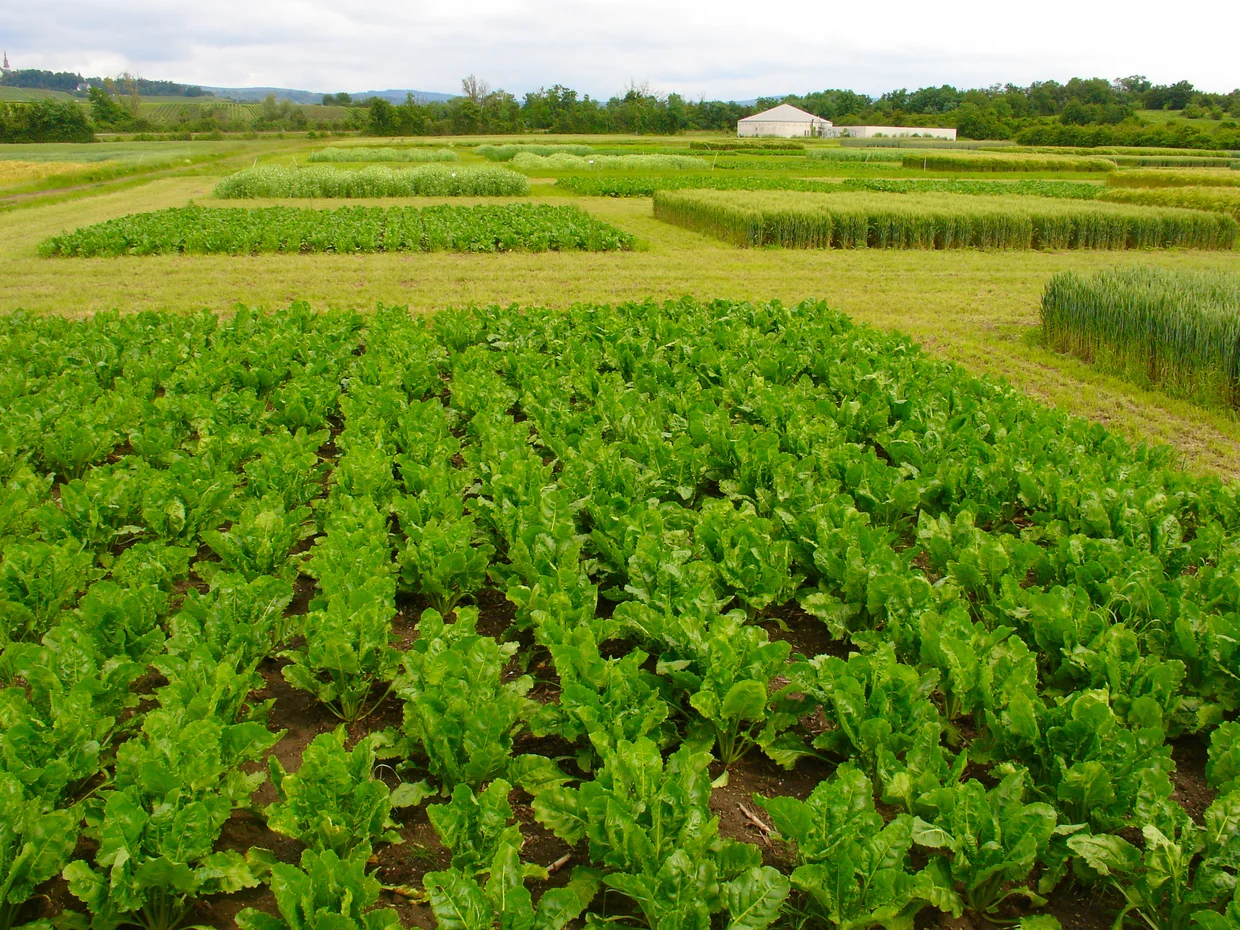
© Kisinga, Benson Kartoffelfeld in der Nähe der TH

What the program is 

The M.Sc. in Sustainable Intensification of Agricultural Production

We offer an attractive study program combining advanced and applied sciences in a familiar atmosphere at a modern university in the heart of Europe. Bingen is a small city in the UNESCO world heritage site “Middle Rhine Valley”. The study course is free of charge.  Modern labs and an experimental farm offer the opportunity for the students to work on solutions in agriculture in different research groups offering a skill set for an excellent career start. 

We follow the European Credit Transfer System (ECTS). The general university entrance qualification ("Allgemeine Hochschulzugangsberechtigung") for the Master's programme is a Bachelor's grade of at least 2.5 or better.

The applicant should have an affinity for agriculture and sustainability. The MSc addresses Bachelor's graduates who have completed a degree in agriculture. In addition, students should be willing to acquire extra fundamentals on their own and get involved in topics not related to their field of study.

  • a BSc degree with at least 180 CP (equivalent to a German three-year BSc according to the anabin database (https://anabin.kmk.org/
  • Proven knowledge in the following four subjects (minimum of 6 CP, respectively)  are required for admission to the study course:
    • Agricultural engineering
    • Animal husbandry 
    • Plant production
    • Agricultural economics
  • an overall grade (Bachelor's) better than 2.5 (German grading system)
  • A profound knowledge of English (IELTS-score of 5.5 or above, CEFR B2 or better)
  • a VPD (Vorprüfungsdokumentation) issued by uni-assist (https://www.uni-assist.de/) for the TH Bingen, not older than one year.


The Master's degree programme is divided into a lecture phase of two semesters, a practical semester and a final phase with a Master's thesis inclusive of colloquium of one semester each. In the lecture phase, 33 CP must be completed as compulsory modules and 27 CP with modules from a catalogue of elective modules. The module ‘Research Project’ (12 CP) is a compulsory module in which an own scientific project will be conducted. In this module, students have the task of planning, carrying out and presenting a research-based projects that offers applicable solutions in the agricultural sector. This module is supported professionally and methodologically by the compulsory modules ‘Scientific Working’ and ‘Advanced Statistical Methods and Analysis’. Other compulsory modules are ‘International Agricultural Economics and Policy’ and ‘Land, Soil and Water Management’. From the list of elective modules students will be enabled to build up their own specific scientific profile. 

As a rule, 300 credit points are required for a master's degree.The standard period of study course is 4 semester or 120 credit points.

Advanced statistical methods and analysis 3 CP
Climate change and environmental impacts 3 CP
Land, soil and water management 3 CP
International agricultural economics and policies 6 CP
Research Project 12 CP
Scientific working 6 CP
Crop and Pesticide Resistance and Resistance Management 6 CP
Crop Improvement and Seed Systems 6 CP
Digital Farm Management 6 CP
Ecological Intensification of Agricultural Systems 3 CP
English for Academic and Professional Purposes 6 CP
Harvest and Post-Harvest Technologies 3 CP
Improvement of Soil Fertility and Plant - Microorganism Interactions 6 CP
Integrated Crop Production and Protection 6 CP
Introduction to Applied Agricultural Sector Modelling 3 CP
Introduction to Molecular Biological Diagnostics 6 CP
Research Module 18 CP
Resource Economics 3 CP
Sutainable Agriculural Economics 3 CP
Sustainable Animal Nutrition and Technology 6 CP
Sustainable Livestock Production 6 CP

Minimum of four month attachment in an associated (international) company or institute of own choice

Master thesis project with colloquium (30 CP)

The course concludes with the awarding of the academic degree Master of Science (M.Sc.).

Graduates are prepared for a wide range of international careers, including: 

  • Sustainable agriculture consulting and farm system design 

  • Policy advisory in ministries, NGOs, or international development organizations 

  • Applied agricultural research in universities or public/private research institutes 

  • Leadership roles in climate-smart agriculture, food security, and rural development 

  • Ph.D. programs in agriculture, environmental science, or related fields 

Whether you're aiming to improve agriculture in your home country or contribute to global sustainability, this degree opens doors to a meaningful and impactful career. 

Professor für Ökologischer Pflanzenbau +49 6721 409 492 E-Mail schreiben

2-116

Prof. Dr. Thore Toews

Prüfungsausschussvorsitz
Professor für Angewandte landwirtsch. Betriebslehre, landw. Buchfuehrung und Steuerlehre, Taxationslehre, landw. Betriebsplanung und Controlling +49 6721 409 294 E-Mail schreiben

2-112

Mitarbeiterin Fachbereich 1 +49 6721 409 189 E-Mail schreiben

2-122

Tanja Lehr

Sekretariat
Mitarbeiterin Fachbereich 1 +49 6721 409 443 E-Mail schreiben

2-102